Social media can be a double-edged sword for your brand. On one hand, it’s a powerful way to share your story, connect with your audience, and build credibility. On the other hand, those same platforms can put your reputation at risk. A single post can misrepresent your actions, twist your message, or spread false claims, and once that content starts gaining traction, the fallout can go far beyond just one comment or screenshot.
That’s why it’s so important to know which types of content pose the biggest risks and how to respond quickly. Staying on top of this is a key part of smart brand reputation management.
Negative social media content has a long shelf life. Screenshots and reposts can keep harmful narratives alive even after the original post is edited or deleted. This is why you need to take social media online reputation management seriously. When someone searches your name or your company, your social media presence shapes their impression before they meet you, speak with you, or invest in you. A single damaging post can stand in the way of new opportunities, partnerships, or clients.
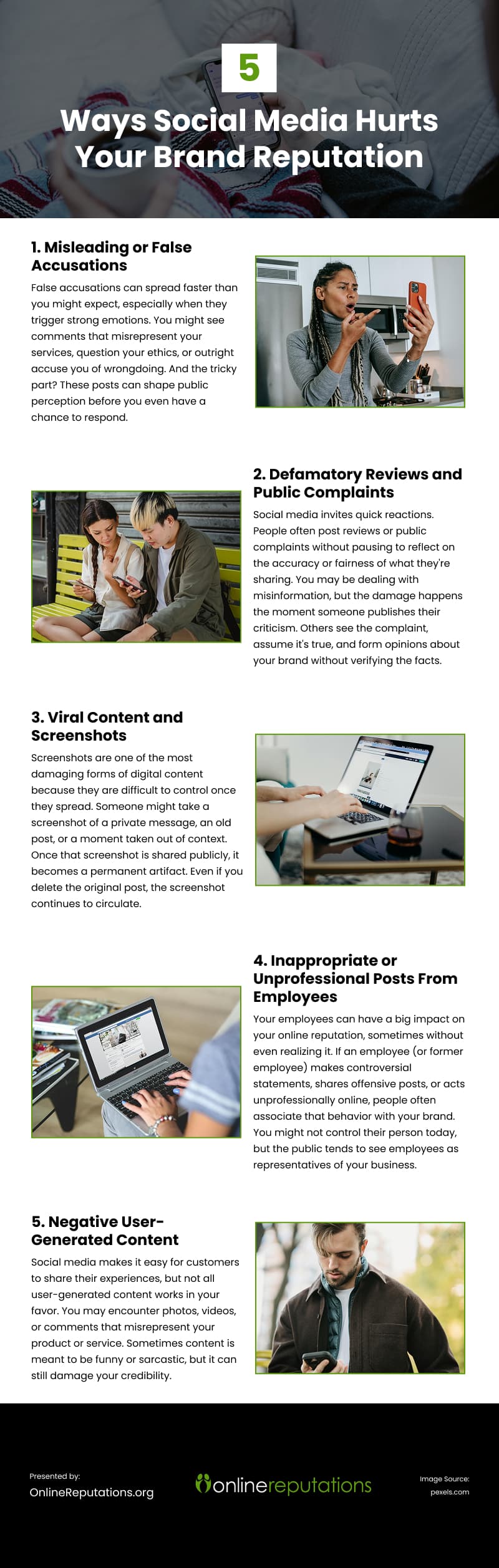
1. Misleading or False Accusations
False accusations can spread faster than you might expect, especially when they trigger strong emotions. You might see comments that misrepresent your services, question your ethics, or outright accuse you of wrongdoing. And the tricky part? These posts can shape public perception before you even have a chance to respond.
In competitive industries, some businesses even face targeted attacks designed to damage credibility. Once this kind of content gets traction through shares, reactions, or reposts, rebuilding trust can be tough.
Sometimes, a simple misunderstanding can spiral into exaggerated claims. An unhappy customer might describe a situation unfairly or inaccurately, and suddenly that version of events becomes the story everyone sees. You know the truth, but the platform often amplifies the loudest voices. That’s why monitoring tools are essential; you want to catch these posts early so you can respond, clarify, or suppress negative content before it takes on a life of its own.
And yes, false accusations can also come from anonymous accounts. People hiding behind usernames feel freer to post inflammatory claims without proof. These posts often grab attention because they seem dramatic or personal, and even if the commenter disappears later, the damage can linger in search results or on public pages.
2. Defamatory Reviews and Public Complaints
Social media invites quick reactions. People often post reviews or public complaints without pausing to reflect on the accuracy or fairness of what they’re sharing. You may be dealing with misinformation, but the damage happens the moment someone publishes their criticism. Others see the complaint, assume it’s true, and form opinions about your brand without verifying the facts. When these complaints appear in threads, Facebook groups, local forums, or on discussion platforms, they can follow you long after the issue has been resolved.
Defamatory content also spreads more easily because users tend to engage with content that sparks controversy. A single review on a platform like Facebook, Reddit, or TikTok can become the basis for long discussions that misrepresent your actions or business practices. Even if the review is written out of frustration or misinterpretation, it has the power to influence anyone who comes across it. You may feel tempted to ignore it, but silence leaves the narrative unchallenged.
Public complaints also attract the attention of search engines. Google often indexes social posts, meaning your audience may encounter these complaints in search results. This creates long-term consequences that extend far beyond the immediate platform. You need a plan for responding to reviews and a strategy for addressing search visibility if the content gains traction.
3. Viral Content and Screenshots
Screenshots are one of the most damaging forms of digital content because they are difficult to control once they spread. Someone might take a screenshot of a private message, an old post, or a moment taken out of context. Once that screenshot is shared publicly, it becomes a permanent artifact. Even if you delete the original post, the screenshot continues to circulate. You may find it referenced on X, TikTok, Reddit, or Instagram—platforms that thrive on fast-moving viral reactions.
You also run into problems when misinformation is added to the screenshot or paired with captions that distort its meaning. Users often consume content quickly, which means they may believe the caption without verifying the source. If the screenshot spreads widely, you carry the burden of cleaning up the reputation damage.
Viral content often involves humor, shock value, or outrage, and these emotional triggers encourage sharing. Even a minor issue can explode into a major narrative if the right user with a large following chooses to amplify it. This is why you must remain aware of how your content is perceived, how employees engage online, and how older posts may be interpreted in today’s cultural context.
4. Inappropriate or Unprofessional Posts From Employees
Your employees can have a big impact on your online reputation, sometimes without even realizing it. If an employee (or former employee) makes controversial statements, shares offensive posts, or acts unprofessionally online, people often associate that behavior with your brand. You might not control their personal accounts, but the public tends to see employees as representatives of your business. One misstep can spark backlash that affects your whole organization.
That’s why it’s important to consider how personal posts impact your workplace culture. If employees list your company on their profiles, then comment on sensitive topics, engage in online arguments, or post inappropriate jokes, audiences may interpret those actions as reflecting your brand’s values. That’s when managing perceptions becomes tricky, because what people see online might not match your company’s actual principles.
And don’t forget about former employees. Someone who left on bad terms might share misleading stories or private information that misrepresents your operations. These posts can spread fast because people love “insider” content. Without a clear plan, you could end up constantly chasing narratives that started from one person’s frustration rather than the truth.
5. Negative User-Generated Content
Social media makes it easy for customers to share their experiences, but not all user-generated content works in your favor. You may encounter photos, videos, or comments that misrepresent your product or service. Sometimes content is meant to be funny or sarcastic, but it can still damage your credibility. Catching these situations early is key, so you can respond or clarify what your brand truly stands for.
You might also notice users tagging your business in inappropriate posts or linking your brand to trending content that doesn’t align with your values. Hashtags can spread misunderstandings quickly, and if your name becomes associated with the wrong story, you need to step in before the association becomes permanent.
Trending topics can be tricky, too. If your brand gets pulled into a viral discussion by mistake or due to an unrelated issue, the narrative can spiral fast. Handling this kind of confusion requires quick action, clear communication, and a plan to counteract or suppress misinformation before it takes hold.
How to Protect Your Brand
You can prevent a significant amount of damage by closely monitoring your platforms, establishing internal guidelines, and quickly identifying harmful posts. Reputation issues escalate when they go unnoticed or unaddressed, and many of the worst cases involve content that spreads before a business has a chance to respond.
A few protective steps you can take include:
- Regularly monitoring your branded keywords using relevant tools.
- Creating internal communication guidelines for employees.
- Preparing a response plan for negative or misleading content.
These measures reduce your risk and give you more control over your brand image. You also want to consider how your ongoing content strategy supports your reputation. When you publish high-value, consistent content, you increase your authority across search engines and social platforms, making it harder for negative posts to rise above your positive assets.
Take Control of Your Online Reputation
You depend on your online presence to introduce your brand to the world. Social media helps you create meaningful connections, but it also exposes you to unpredictable risks. When damaging content appears, be prepared to respond quickly, communicate clearly, and reframe the narrative in a way that reflects your genuine values.
With proactive monitoring and smart reputation strategies, you can protect your image and maintain the trust you have worked hard to build.
Video
Infographic
Social media offers powerful opportunities to share your brand story and connect with customers, but it also creates rapid‑fire risks that can harm your reputation before you even realize it’s happening. This infographic breaks down the key ways social media can damage your brand reputation.