If you want to improve how people see you online, you need to track the right data. Online reputation management is not just about posting positive content. You need to know how that content performs and whether public perception actually shifts over time. Clear numbers show you what works and what needs adjustment.
You might notice progress when negative search results move down or when you receive more positive feedback. That is encouraging, but you should not rely solely on instinct. Digital tools give you measurable insights into search visibility, engagement, sentiment, and traffic. When you monitor these metrics consistently, you see whether your strategy truly strengthens your online presence.
Here are seven basic steps for turning online reputation management into measurable progress instead of guesswork.
1. Monitor Search Result Shifts for Your Brand
One of the first places people form an opinion about you is in search engines. Type your name, company, or brand into Google and see where you appear. Those results, and their movement over time, say a lot about how the public perceives you. You want to see more positive links, your own assets like your website or social profiles, and updated content replacing outdated or harmful material.
You can use free tools like Google Alerts or paid platforms that monitor search rankings to see what is rising or falling. If you are publishing strategic content and applying SEO tactics, you should start seeing positive content about you or your brand rising in results.
2. Track Online Review Volume and Star Ratings
If you manage a business or personal brand with customer feedback online, review sites play a huge role in shaping your reputation. Metrics such as average star ratings, review counts, and review recency provide real-time insights into how people perceive your brand experience. A spike in new reviews—especially positive ones—often indicates your reputation campaigns are building trust and engagement.
Don’t just focus on the number. A consistent flow of thoughtful, balanced reviews over time will have more lasting impact than a handful of short 5-star ratings posted all at once. Review diversity also matters. Are people talking about different aspects of your service? Are recent comments more positive than those from six months ago? These trends reveal progress.
3. Follow Social Media Sentiment and Engagement
Your social media presence is another powerful indicator of how you’re perceived. Engagement metrics such as likes, comments, shares, and follower growth help show how your audience is responding to your posts. But sentiment analysis digs deeper. It captures the tone of conversations about you online, highlighting whether people are speaking positively or negatively.
Several reputation tools now include AI-driven sentiment tracking across social platforms. For example, if people mention your business name alongside words like “helpful” or “trusted,” you’re on the right track. If complaints or sarcasm dominate, it might be time to shift messaging or address concerns directly.
A social media online reputation management agency can help interpret sentiment and develop strategies to respond effectively, turning negative conversations into opportunities to strengthen your brand.
4. Measure Volume and Velocity of Mentions
Reputation management isn’t only about what’s being said, it’s about how often it’s said and how fast those mentions spread. You’ll want to measure how many times your name or brand appears online in a given period. Are mentions increasing? Are they happening across quality sites or just low-value pages? Tools like Brandwatch and Hootsuite can help you track these metrics.
Velocity is especially important when something new happens, like a product launch, an event, or a reputation crisis. If you’re managing a cleanup campaign, you want to see positive mentions outpace negative ones quickly. That shift shows you’ve redirected the conversation.
5. Monitor Backlink Growth from Trusted Sources
Backlinks are links from other websites that point to yours. When trusted sources link to your content, it builds credibility, not just with Google, but with people searching for trustworthy information. As you publish reputation-enhancing articles, videos, or features, track how many sites link back to you, and whether those sites have strong authority.
For reputation building, it’s better to earn five high-quality links from media outlets, blogs, or expert resources than 50 low-value ones. Tools like Ahrefs or Moz can show you your backlink profile growth over time. A diverse set of healthy backlinks is a strong signal that others recognize your authority.
6. Track Website Traffic and Time on Page
If you’ve invested in improving your website as part of your reputation strategy, you’ll want to see those efforts pay off with more traffic and longer time spent on key pages. If people are finding your site from search, reading your bio or blog, and staying to learn more, you’ve likely earned their attention and trust.
Review your analytics regularly. Look for trends like lower bounce rates (people leaving after one page), more return visitors, and increased time on your About page or Testimonials page. Those indicate your site is giving the right impression.
7. Measure Content Performance and Sharing
Your content, such as articles, videos, interviews, and social posts, should work together to reinforce your reputation. Are people watching your videos to the end? Are they sharing your thought leadership articles? Are your posts driving traffic back to your website?
You can measure these using platform-specific insights (such as YouTube Analytics or LinkedIn post stats) and broader tools like Google Analytics. If certain formats or topics get strong traction, double down on them. These are your best tools for shaping perception at scale.
How to Organize and Review These Metrics
To get the full picture of your progress, it helps to create a monthly report that pulls together data across search, reviews, social media, content, and website traffic. You don’t need to be a data expert. Even a simple dashboard using tools like Google Looker Studio or spreadsheet templates can help you see where your reputation is improving and where it needs more work.
Here’s a simple structure:
- Search Results: Top 10 branded queries, changes month-to-month
- Review Scores: Average rating, review count, sentiment trends
- Social Metrics: Engagement totals, positive vs. negative mentions
- Backlinks: New referring domains, high-authority links
- Traffic: Site visits, bounce rates, time on reputation-focused pages
Keep Your Progress Visible and Measurable
Reputation doesn’t change overnight, but with the right strategy and tracking, you can see clear signs of improvement over time. By focusing on these key metrics, you’ll know exactly what’s working, what needs adjustment, and how to stay in control of your digital identity.
Even if you’re just starting out, pick one or two of these metrics to begin monitoring today. An online reputation management agency can help you get started. The more you understand your digital footprint, the better equipped you’ll be to build and protect a reputation that reflects who you really are.
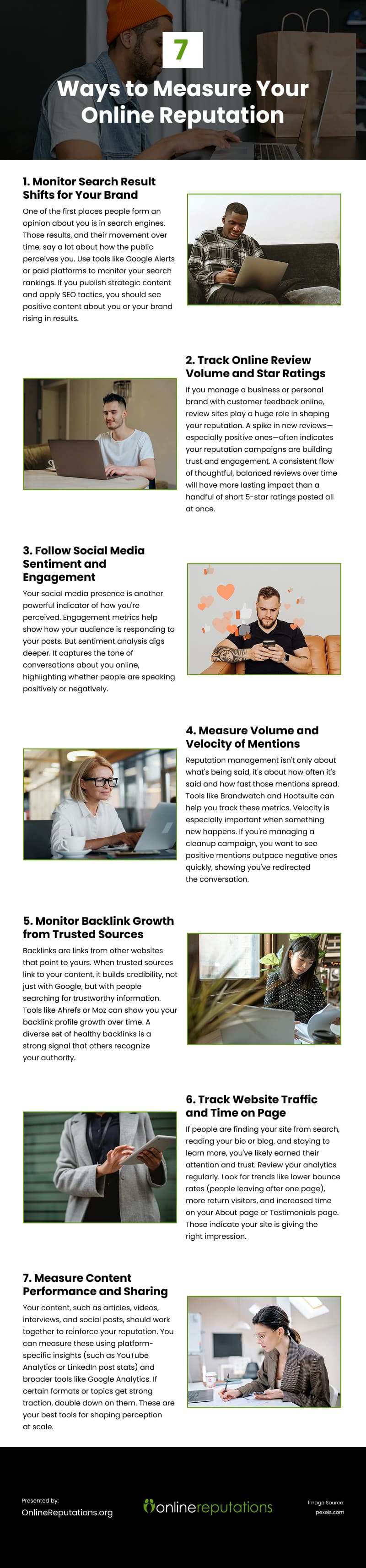
Video
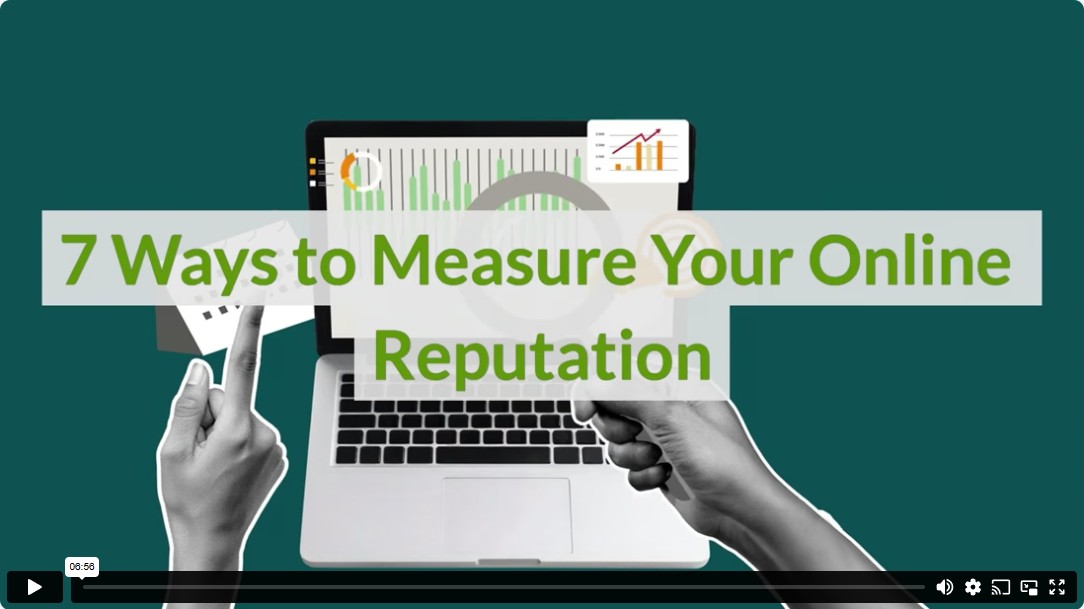
Infographic
Effective online reputation management requires more than posting positive content — it depends on tracking the right data to understand how public perception shifts over time. This infographic provides ways to measure and monitor your online reputation.